
Packetworx and DICT Highlight Philippine Digital Innovations at LoRa Alliance® Event in Munich: Deployment and Solution Perspective
The technical value of LoRaWAN is strongest when it is combined with coverage strategy, device interoperability, partner enablement, hosted platforms, and repeatable deployment patterns.
Executive Brief
- Focus area: LoRaWAN network, partnerships, and IoT market adoption.
- Connectivity model: low-power distributed sensing over LoRaWAN, supported by gateways, device management, dashboards, alerts, and integration-ready data.
- Solution fit: combine connectivity, packetSENSE devices, packetCELL gateways, packetVIEW, and partner enablement into a phased deployment.
- Implementation principle: start with measurable operational decisions, not with isolated devices.
The Standards and Interoperability Problem
IoT deployments scale more safely when they are built on open standards, interoperable devices, and a partner ecosystem. Global LoRaWAN events and alliances matter because Philippine deployments need devices, platforms, gateways, and expertise that can work together over time.
LoRaWAN is promoted as an open LPWAN standard for battery-operated IoT devices
LoRa AllianceLoRaWAN networks can add smart-city, utility, building, and industrial use cases over shared infrastructure
LoRa AllianceLoRaWAN base stations were included in Packetworx and Actility's nationwide deployment plan
ActilityPriority Use Cases
- Select devices and platforms that can be supported, decoded, managed, and integrated over the life of the deployment.
- Use alliance and partner activity to bring proven practices into Philippine cities, schools, utilities, farms, and enterprises.
- Protect customers from one-off deployments by standardizing coverage, onboarding, alerts, and data integration.
LoRaWAN Adoption Context
LoRaWAN fits IoT workloads that need long range, low power, wide-area coverage, and modest payloads from many distributed sensors. For the Philippine market, the strategic issue is not simply whether sensors can transmit; it is whether enterprises, LGUs, schools, telcos, and integrators can build reliable programs on top of connectivity, gateways, device management, dashboards, and support.
Reference Architecture
- Sensing layer: low-power devices capture physical signals such as air quality, water level, rainfall, energy, motion, temperature, humidity, equipment status, location, or user feedback.
- Connectivity layer: LoRaWAN carries small telemetry messages over long distances to packetCELL gateways or compatible LoRaWAN infrastructure, with cellular or wired backhaul where needed.
- Network and platform layer: the LoRaWAN Network Server, packetVIEW, and partner platforms manage device identity, payload decoding, dashboards, alerts, reports, and APIs.
- Operations layer: facility teams, LGUs, campuses, integrators, or enterprise users act on exceptions, compare trends, and refine thresholds based on actual field behavior.
Packetworx Solution Stack
This use case can be implemented as a layered solution rather than a one-off installation. Relevant Packetworx building blocks include:
- packetCELL Outdoor LoRaWAN Gateway for field, campus, city, and industrial coverage
- LoRaWAN Network Server and packetVIEW for device onboarding, routing, dashboards, and alerts
- packetMODBUS for connecting industrial and utility equipment that already speaks Modbus
- packetSENSE devices across air quality, weather, water, power, motion, tracking, and safety use cases
- Partner integrations through REST APIs, system integrators, telcos, universities, and solution providers
Deployment Blueprint
- Define the operating decision first: alerting, reporting, compliance evidence, maintenance triage, resource optimization, or public-service coordination.
- Map the physical environment: sensor locations, mounting constraints, gateway placement, backhaul, power source, and field-service access.
- Select the sensing and integration stack: LoRaWAN devices, packetCELL gateways, packetMODBUS where legacy equipment is involved, packetVIEW dashboards, and APIs where the data must feed an existing platform.
- Set data rules before rollout: sampling interval, alert thresholds, escalation owner, historical reporting cadence, and exception-handling workflow.
- Pilot in a bounded area, review data quality and user behavior, then expand by repeating the same deployment pattern across sites, departments, campuses, or LGU locations.
Operational Metrics to Track
A successful rollout should define success measures before devices are installed. Useful metrics for this topic include:
- gateway availability
- device join success
- message delivery consistency
- battery replacement interval
- pilot-to-rollout conversion
Governance, Security, and Integration
LoRaWAN deployments should be treated as operational technology, not casual gadget projects. Device identity, gateway ownership, alert permissions, dashboard access, data retention, and API use must be clear before scale-up. For schools, LGUs, utilities, and enterprises, the same discipline also improves procurement: each phase can be tied to coverage, device count, operating owner, service-level expectation, and a measurable outcome.
Background Reading
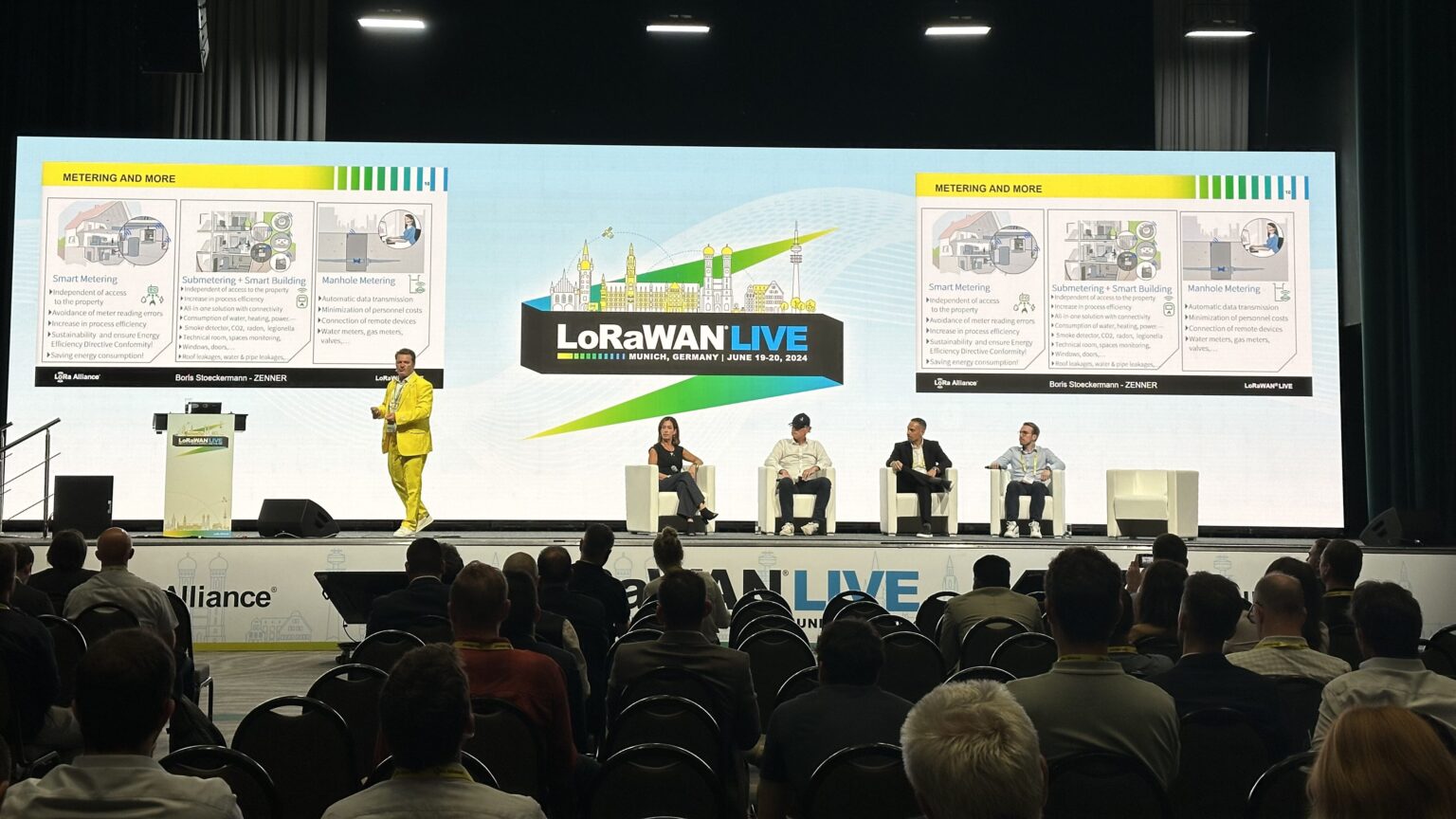
LoRaWAN took center stage in Munich, Germany last June 17-20, offering an immersive agenda that included technical sessions, a vibrant marketplace of products and solutions, and engaging keynote presentations from industry VIPs.
The event featured live demonstrations showcasing a range of use cases and market applications, alongside ample opportunities for networking and business meetings. It attracted a diverse audience, bringing together global LoRaWAN leaders, newcomers, innovators, decision-makers, developers, engineers, system integrators, network providers, device manufacturers, end users, enterprises, and media.
Spotlight on Philippine Innovations
Packetworx, a trailblazer in the Internet of Things (IoT) sector in the Philippines, attended this prestigious event alongside Department of Information and Communications Technology (DICT) Undersecretary Jocelle Batapa-Sigue. Their mission was to explore opportunities for advancing IoT adoption in the Philippines.
During the LoRa Alliance Marketing Committee Meeting, Undersecretary Batapa-Sigue presented the Philippines’ Digitalization Roadmap. This strategic plan aims to transform the country’s digital landscape by bridging the digital divide and fostering sustainable growth. Several groundbreaking initiatives were highlighted, including:
Tech Trends: This initiative provides Filipinos with free, self-paced learning programs, aiming to equip them with the necessary skills for the rapidly evolving ICT industry.
SETPH: The SET PH program explores emerging technologies, including blockchain, artificial intelligence, and IoT, to cultivate an ecosystem that supports and sustains technological advancements.
eGovernment Platforms: Enhancing digital services through improved eGovernment platforms is a priority, aiming to streamline and expand public sector digital interactions.
Free Public Internet Access Program: To address internet accessibility challenges, the program aims to install 110,000 free Wi-Fi access points nationwide. As of April 2024, 12,717 sites have been established, significantly improving connectivity in underserved areas.
Skills Training: The DICT offers targeted training programs to address the skills gap and bolster the nation’s ICT workforce.
Emergency Telecommunications: The DICT leads in disaster response through the Emergency Telecommunications Cluster and the Mobile Operations Vehicles for Emergency (MOVE) Sets, which provide crucial communication support during emergencies.
Unveiling the IoT National Strategy
Undersecretary Batapa-Sigue also introduced the DICT’s new IoT National Strategy For Policy And Industry Roadmap And Ecosystem Development (INSPIRED). This policy roadmap aims to advance IoT in the Philippines, focusing on objectives such as workforce training, capacity building, and infrastructure development.
At the Munich event, Packetworx and the DICT appealed to the LoRa Alliance® for support in training, IoT certifications, capacity building, and funding to accelerate these initiatives. Usec. Jocelle’s presentation garnered significant support from LoRa Alliance members.
Upcoming IoT Conference 2024
The upcoming IoT Conference 2024, scheduled for October 29-30, 2024, at the SMX Convention Center, will further this momentum. Six LoRa Alliance® Board member companies from the US, France, Germany, Sweden, and Taiwan have pledged their support for the event, which aims to shape IoT in the Philippines through three key roundtable discussions:
First Roundtable: Representatives from ASEAN countries will discuss cooperation in advancing IoT and LoRaWAN technologies, frequency standardization, and a regional IoT framework.
Second Roundtable: Focused on collaboration between the LoRa Alliance® and Philippine government agencies, this session will explore policies, connectivity solutions, and strategies to ease IoT adoption in various sectors.
Third Roundtable: System integrators and LoRa Alliance® members will discuss effective deployment strategies for IoT solutions across private and industry sectors, addressing common concerns and supporting business growth through streamlined implementation.
A Step Forward for the Philippines’ IoT Agenda
The collaboration amongst Packetworx, DICT, and LoRa Alliance® marks a significant advancement for the Philippines’ IoT agenda. By fostering these partnerships, the country is poised to unlock new opportunities and drive innovation across its digital IoT landscape.