
Smart Utilities: Deployment and Solution Perspective
Remote readings, leak detection, flow, pressure, level, power, and reporting turn disconnected utility infrastructure into measurable operating assets.
Executive Brief
- Focus area: Utility monitoring and resource management.
- Connectivity model: low-power distributed sensing over LoRaWAN, supported by gateways, device management, dashboards, alerts, and integration-ready data.
- Solution fit: combine connectivity, packetSENSE devices, packetCELL gateways, packetVIEW, and partner enablement into a phased deployment.
- Implementation principle: start with measurable operational decisions, not with isolated devices.
The Distributed Utility Loss Problem
Water and energy systems are spread across meters, tanks, pumps, panels, buildings, districts, and customer locations. Manual readings and monthly reports are too slow for leak detection, abnormal consumption, power-quality issues, and non-revenue-water control. Smart utility programs need frequent, trusted telemetry that helps operators see pressure, flow, level, consumption, and equipment health before losses compound.
non-revenue water can still occur in a well-performing utility; weaker systems can lose far more
ADB Development Asianon-revenue water levels often range this high in parts of Asia
Asian Development Banktransmission and distribution power losses were reported for the Philippines in 2024 energy indicators
EnerdataPriority Use Cases
- Remote meter reading for water and energy accounts where manual collection delays billing, analysis, and exception response.
- Flow, pressure, leak, and tank-level monitoring for district metered areas, reservoirs, service lines, and pump rooms.
- Energy, UPS, and packetMODBUS monitoring for facilities that need early warning on abnormal load, backup readiness, and equipment-side electrical issues.
Utility Operations Context
Water and power systems often span locations that are difficult to inspect frequently. Manual readings delay action, while hidden leaks, abnormal consumption, and power-quality issues can continue for days or weeks. LoRaWAN gives operators a practical way to collect small but important readings from meters, tanks, pipes, pumps, panels, and distributed facilities.
Reference Architecture
- Sensing layer: low-power devices capture physical signals such as air quality, water level, rainfall, energy, motion, temperature, humidity, equipment status, location, or user feedback.
- Connectivity layer: LoRaWAN carries small telemetry messages over long distances to packetCELL gateways or compatible LoRaWAN infrastructure, with cellular or wired backhaul where needed.
- Network and platform layer: the LoRaWAN Network Server, packetVIEW, and partner platforms manage device identity, payload decoding, dashboards, alerts, reports, and APIs.
- Operations layer: facility teams, LGUs, campuses, integrators, or enterprise users act on exceptions, compare trends, and refine thresholds based on actual field behavior.
Packetworx Solution Stack
This use case can be implemented as a layered solution rather than a one-off installation. Relevant Packetworx building blocks include:
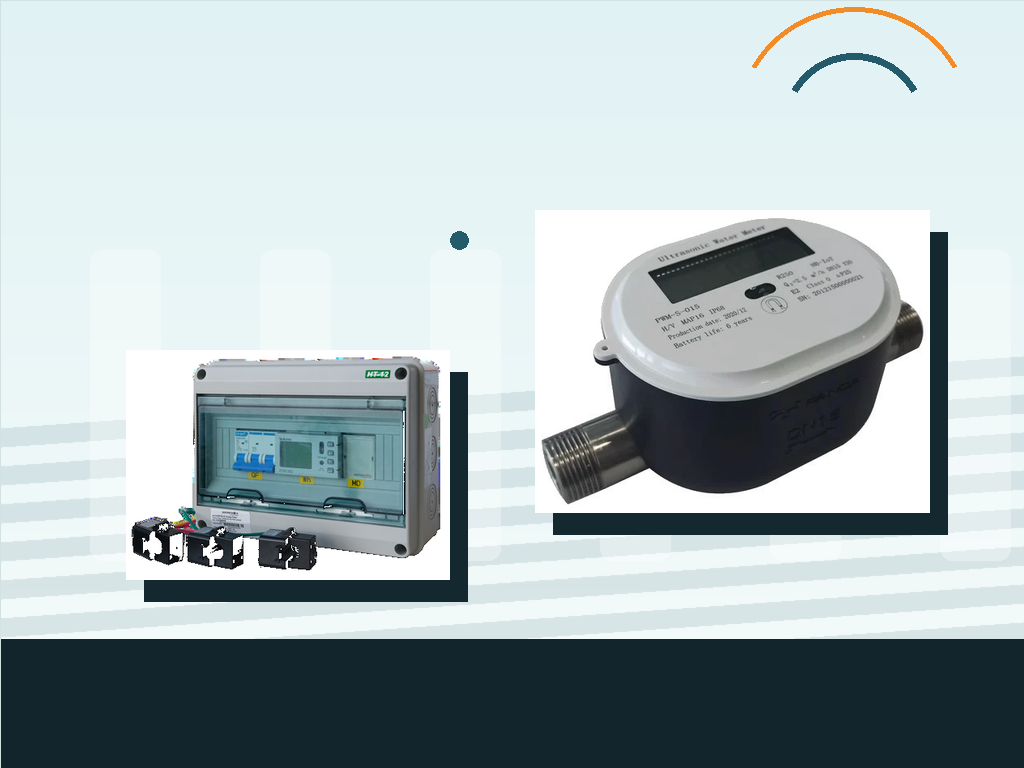
- packetSENSE Smart Ultrasonic Water Meter for remote water metering and consumption visibility
- packetSENSE Ultrasonic Flow Meter, pressure, totalizer, and hydrostatic level sensors for water infrastructure
- packetSENSE Leak Detection for early water ingress and facility-protection alerts
- packetSENSE AC Energy Meter with packetMODBUS for single-phase and three-phase power monitoring
- packetUPS and packetMODBUS for backup power, equipment status, and legacy utility integration
Deployment Blueprint
- Define the operating decision first: alerting, reporting, compliance evidence, maintenance triage, resource optimization, or public-service coordination.
- Map the physical environment: sensor locations, mounting constraints, gateway placement, backhaul, power source, and field-service access.
- Select the sensing and integration stack: LoRaWAN devices, packetCELL gateways, packetMODBUS where legacy equipment is involved, packetVIEW dashboards, and APIs where the data must feed an existing platform.
- Set data rules before rollout: sampling interval, alert thresholds, escalation owner, historical reporting cadence, and exception-handling workflow.
- Pilot in a bounded area, review data quality and user behavior, then expand by repeating the same deployment pattern across sites, departments, campuses, or LGU locations.
Operational Metrics to Track
A successful rollout should define success measures before devices are installed. Useful metrics for this topic include:
- meter-reading frequency
- non-revenue water indicators
- leak response time
- tank or reservoir trend
- energy use and power-quality exceptions
Governance, Security, and Integration
LoRaWAN deployments should be treated as operational technology, not casual gadget projects. Device identity, gateway ownership, alert permissions, dashboard access, data retention, and API use must be clear before scale-up. For schools, LGUs, utilities, and enterprises, the same discipline also improves procurement: each phase can be tied to coverage, device count, operating owner, service-level expectation, and a measurable outcome.
Background Reading
Building tomorrow’s smart utilities today!
Packetworx's LoRaWAN smart utility solutions provide ease in implementing digital utility distribution operations and automation processes. It also enables utility providers to minimize wastage and at the same time enhance customers’ experience.
Long-battery life devices
Improved operations efficiency
Enhanced customer experience
Remote visibility on your operations
Reliable, robust, and cost-effective connectivity
Detection of anomalies and problems before costly damages occur
Get actionable insights from data real-time and anywhere.
Using low power smart meters, sensors, and actuators, utility providers can get insights on usage patterns, power outage, leaks, and aging infrastructures which can then reduce operating expenses and save on consumption.
5 to 10 years of battery life
Send alerts on tampering
Remote turn on and off meters when residents or tenants are out for extended periods of time.
Smart Power Meters | Smart Water Meters | Water Leak Sensors
Buildings | Data Centers | Warehouse | Condominiums | Offices | Real Estate/Villages
Water Pressure and Flow Monitoring
Our water pressure and flow monitoring solutions enable water utility providers to gain insight into pressure and flow and at the same time find leakages.
packetPRESSURE | packetFLOW
Packetworx's smart lighting solution allows power distribution companies to remotely switch on and off streetlights to save power and to create efficient city light management.