
The Future of Disaster Management with IDMS Solutions: Deployment and Solution Perspective
Connected sensing helps public-sector teams move from episodic field checks to continuous situational awareness for LGUs, schools, public buildings, and critical community assets.
Executive Brief
- Focus area: Disaster risk reduction and public resilience.
- Connectivity model: low-power distributed sensing over LoRaWAN, supported by gateways, device management, dashboards, alerts, and integration-ready data.
- Solution fit: combine connectivity, packetSENSE devices, packetCELL gateways, packetVIEW, and partner enablement into a phased deployment.
- Implementation principle: start with measurable operational decisions, not with isolated devices.
The Disaster Coordination Problem
Disaster management is a coordination challenge: weather, water level, facility condition, field assets, and responder status must reach the right teams quickly enough to change action. Integrated disaster-monitoring systems should therefore combine sensing, dashboards, alerts, ownership, and drill-ready workflows.
tropical cyclones enter the Philippine Area of Responsibility on average
PAGASAestimated fatalities in a magnitude 7.2 West Valley Fault scenario in the Greater Metro Manila risk assessment
World Bankchance of the Philippines exceeding PHP 1.73 trillion in natural-hazard losses in a given year
World Bank Climate ProfilePriority Use Cases
- Unify rainfall, water level, weather, facility, and asset data into operating dashboards for DRRM teams.
- Define alert thresholds, acknowledgement flows, responder roles, and post-event reporting before incidents occur.
- Use LoRaWAN sensors in locations where wired connectivity is impractical or too slow to deploy.
Resilience Context
Flooding, severe weather, infrastructure stress, and facility incidents become more manageable when responders see early indicators before the situation is already visible on the ground. LoRaWAN supports this model because sensors can be placed in drainage channels, waterways, school buildings, public facilities, and remote assets where wired connectivity is expensive or impractical.
Reference Architecture
- Sensing layer: low-power devices capture physical signals such as air quality, water level, rainfall, energy, motion, temperature, humidity, equipment status, location, or user feedback.
- Connectivity layer: LoRaWAN carries small telemetry messages over long distances to packetCELL gateways or compatible LoRaWAN infrastructure, with cellular or wired backhaul where needed.
- Network and platform layer: the LoRaWAN Network Server, packetVIEW, and partner platforms manage device identity, payload decoding, dashboards, alerts, reports, and APIs.
- Operations layer: facility teams, LGUs, campuses, integrators, or enterprise users act on exceptions, compare trends, and refine thresholds based on actual field behavior.
Packetworx Solution Stack
This use case can be implemented as a layered solution rather than a one-off installation. Relevant Packetworx building blocks include:
- packetSENSE Rainfall, Automated Weather Station, and water-level sensors for local hazard awareness
- packetSENSE Outdoor Air Quality, packetNOISE, and environmental stations for public-space monitoring
- packetSENSE Smart Ultrasonic Water Meter, pressure, flow, and totalizer devices for utility and drainage systems
- packetSENSE Compact Tracker and Badge for field assets, workers, and response equipment
- packetVIEW dashboards and alerts for city operations, school administrators, and response teams
Deployment Blueprint
- Define the operating decision first: alerting, reporting, compliance evidence, maintenance triage, resource optimization, or public-service coordination.
- Map the physical environment: sensor locations, mounting constraints, gateway placement, backhaul, power source, and field-service access.
- Select the sensing and integration stack: LoRaWAN devices, packetCELL gateways, packetMODBUS where legacy equipment is involved, packetVIEW dashboards, and APIs where the data must feed an existing platform.
- Set data rules before rollout: sampling interval, alert thresholds, escalation owner, historical reporting cadence, and exception-handling workflow.
- Pilot in a bounded area, review data quality and user behavior, then expand by repeating the same deployment pattern across sites, departments, campuses, or LGU locations.
Operational Metrics to Track
A successful rollout should define success measures before devices are installed. Useful metrics for this topic include:
- rainfall-to-water-level correlation
- threshold alert acknowledgement time
- public-facility condition status
- sensor uptime
- post-event review findings
Governance, Security, and Integration
LoRaWAN deployments should be treated as operational technology, not casual gadget projects. Device identity, gateway ownership, alert permissions, dashboard access, data retention, and API use must be clear before scale-up. For schools, LGUs, utilities, and enterprises, the same discipline also improves procurement: each phase can be tied to coverage, device count, operating owner, service-level expectation, and a measurable outcome.
Background Reading
In a world increasingly affected by natural disasters, proactive monitoring and swift response are more important than ever. At Packetworx, we are proud to introduce our IoT Disaster Management System (IDMS) Solution, designed to empower disaster resilience. This cutting-edge technology ensures real-time data collection and analysis, enabling faster and more informed decision-making.
Shift from traditional reactive to proactive disaster approach
Enable real-time weather monitoring, data analysis, and early warning systems
Mitigate the impact of natural disasters.
Empower disaster management to make informed decisions, reducing the devastating effects of natural calamities.
Our IDMS Solutions integrates a range of innovative devices, each designed to provide precise and actionable data:
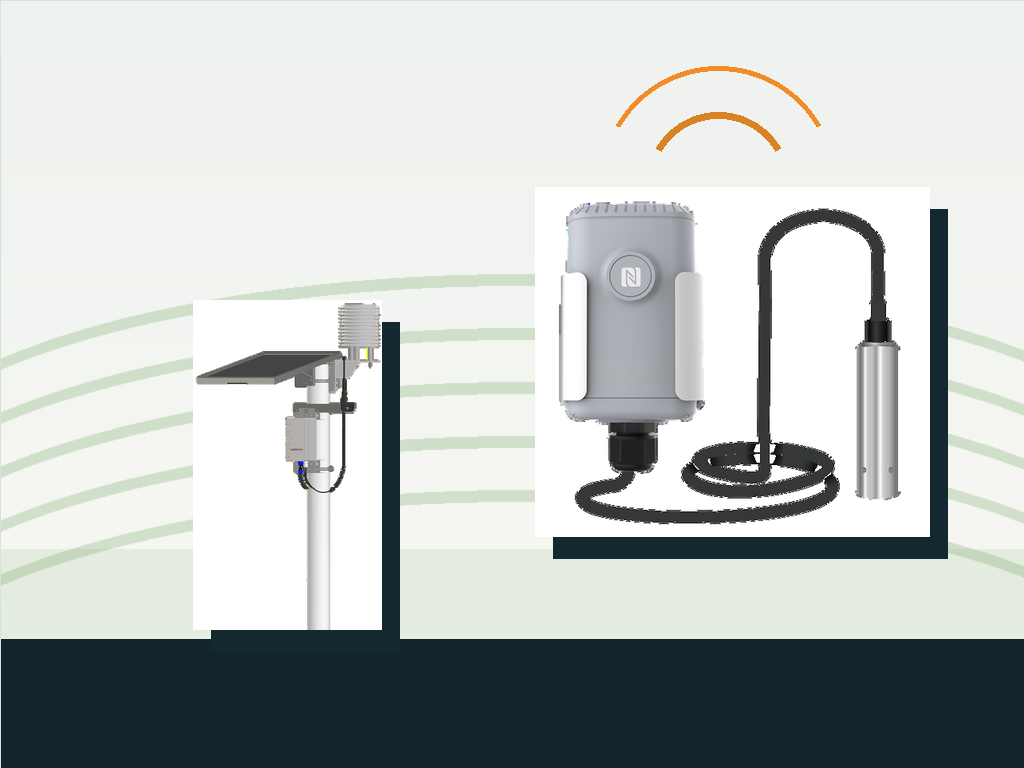
packetSENSE WEATHER Monitoring Device: This comprehensive weather monitoring device measures critical environmental parameters, including temperature, humidity, wind speed and direction, air pressure, and precipitation. It uses advanced sensors such as thermometers, hygrometers, barometers, and rain gauges to deliver accurate data for real-time analysis.
packetSENSE Outdoor Air Quality: Focused on air quality monitoring, this device tracks dust levels (PM1, PM2.5, and PM10), temperature, and humidity. The data is collected at specified, allowing for continuous assessment of outdoor air quality, crucial for public health.
packetSENSE Rainfall: Specifically crafted for rainfall monitoring. It continuously collects data on rainfall intensity (e.g., inches per hour) and total accumulated rainfall, helping authorities respond quickly to potential flood threats.
packetSENSE Submersible and packetSENSE Ultrasonic Proximity Level 10m: These flood monitoring devices provide precise water level, distance, and depth measurements. By delivering reliable and accurate data, they support effective flood management and response strategies.
Use Case: Enhancing Project NOAH in Quezon City
To address the persistent challenge and enhance the capabilities of Project NOAH (Nationwide Operational Assessment of Hazards), the UP Resilience Institute (UPRI) partnered with GEOS and Packetworx to deploy Smart IoT Sensors in areas of Quezon City that are frequently inaccessible or heavily flooded during the rainy season. This strategic deployment empowers the Local Government Unit to make informed decisions and issue timely alerts.
GEOS introduced a s Smart Submersible Water Level Monitoring Devices capable of providing real-time updates once the water level surpasses the 1 cm threshold, these devices continuously measure water levels with remarkable accuracy.
In addition to the monitoring devices, GEOS installed robust Gateways to ensure reliable data transmission. These Gateways, equipped with Ethernet and 3G/4G connectivity and failover support, relay data from the sensors to the user’s dashboard. This connectivity enables users to assess the situation promptly and formulate appropriate responses, ensuring that communities are better protected.
Significant Benefits and Impact
The implementation of Project NOAH, supported by our IDMS Solutions, has already demonstrated remarkable results. Analysis of data from the Quezon City Risk Profile reveals a notable 35.70% reduction in the cost of damages following the implementation of Project NOAH. Remarkably, this reduction was achieved when the project was only 60% complete by 2017. The potential for further damage reduction in flood-related disasters is substantial, with an estimated $2.30B or at least 60% reduction anticipated upon the project’s full implementation.
During the ceremonial launch and handover event on June 13, 2023, attended by representatives from QCDRRMO, GEOS, UPRI, and Packetworx, Mr. Mahar Lagmay commended the IoT Sensors, acknowledging their significant contribution to enabling Local Government Units (LGUs) to monitor flooded or submerged areas effectively.
Join Us in Building Resilient Communities
We invite you to explore how Packetworx's IDMS Solutions can help your organization or community stay ahead of natural disasters. Together, we can build safer, more resilient environments by leveraging the power of IoT technology.