
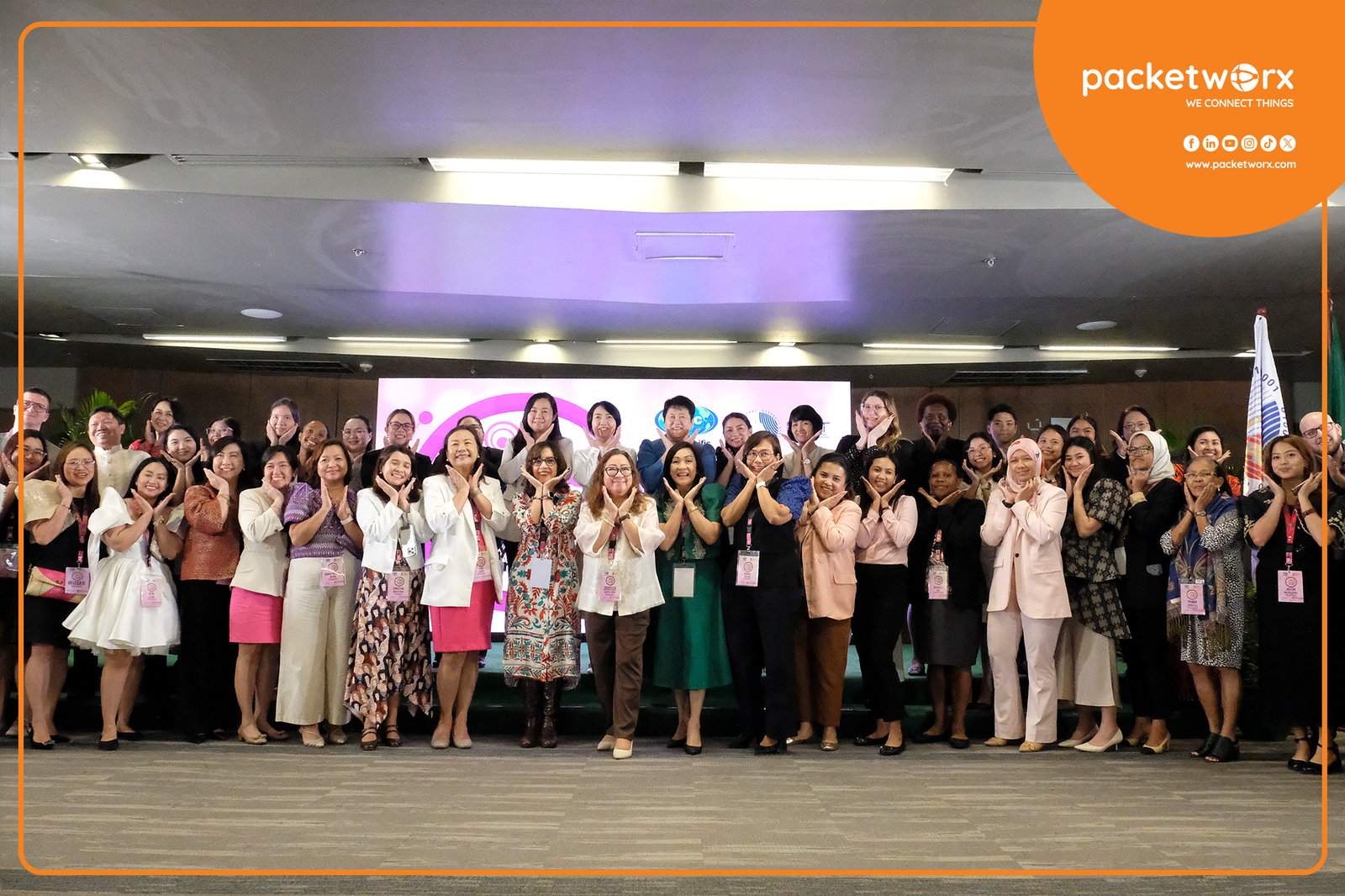
Packetworx Advocates for Female Inclusion in ICT at DIWA-APEC Workshop: Deployment and Solution Perspective
IoT enablement depends on skills, partner readiness, student pathways, and a clear route from prototype to pilot deployment.
Executive Brief
- Focus area: Education, talent, and ecosystem enablement.
- Connectivity model: low-power distributed sensing over LoRaWAN, supported by gateways, device management, dashboards, alerts, and integration-ready data.
- Solution fit: combine connectivity, packetSENSE devices, packetCELL gateways, packetVIEW, and partner enablement into a phased deployment.
- Implementation principle: start with measurable operational decisions, not with isolated devices.
The Inclusive ICT Participation Problem
Digital transformation is weaker when only a narrow group participates in designing, deploying, and governing technology. Inclusion in ICT and IoT matters because connected solutions affect classrooms, cities, public services, agriculture, and enterprise operations; the people building them should reflect the communities they serve.
men are around four times more likely than women to have advanced ICT skills such as programming
UNESCOeducational partners are highlighted in Packetworx community materials
Packetworx Community Initiativesinclusive ICT programs need mentors, exposure, projects, and visible role models
Packetworx DIWA-APEC articlePriority Use Cases
- Support workshops, panels, and mentorship that invite more women and underrepresented students into ICT and IoT.
- Connect inclusion programs to hands-on projects, internships, developer kits, and campus IoT tours.
- Showcase practical roles across product, deployment, marketing, education, engineering, customer success, and data operations.
Enablement Context
IoT adoption depends on people as much as devices. Schools, universities, system integrators, startups, LGUs, and enterprise teams need practical exposure to sensors, LoRaWAN coverage, dashboard design, data interpretation, and deployment discipline. Education programs, hackathons, internships, and developer kits turn abstract interest into working prototypes and deployable use cases.
Reference Architecture
- Sensing layer: low-power devices capture physical signals such as air quality, water level, rainfall, energy, motion, temperature, humidity, equipment status, location, or user feedback.
- Connectivity layer: LoRaWAN carries small telemetry messages over long distances to packetCELL gateways or compatible LoRaWAN infrastructure, with cellular or wired backhaul where needed.
- Network and platform layer: the LoRaWAN Network Server, packetVIEW, and partner platforms manage device identity, payload decoding, dashboards, alerts, reports, and APIs.
- Operations layer: facility teams, LGUs, campuses, integrators, or enterprise users act on exceptions, compare trends, and refine thresholds based on actual field behavior.
Packetworx Solution Stack
This use case can be implemented as a layered solution rather than a one-off installation. Relevant Packetworx building blocks include:
- packetduino, developer kits, and lab-ready devices for student and partner prototyping
- packetSENSE environmental, utility, occupancy, and tracker devices for hands-on use-case development
- packetCELL gateways and LoRaWAN network access for practical connectivity exercises
- packetVIEW dashboards for teaching data visualization, thresholds, alerts, and reporting
- Mentored programs such as Campus IoT Tour, IoT Technology Hub, internships, packetHACKS, and IoTCon activities
Deployment Blueprint
- Define the operating decision first: alerting, reporting, compliance evidence, maintenance triage, resource optimization, or public-service coordination.
- Map the physical environment: sensor locations, mounting constraints, gateway placement, backhaul, power source, and field-service access.
- Select the sensing and integration stack: LoRaWAN devices, packetCELL gateways, packetMODBUS where legacy equipment is involved, packetVIEW dashboards, and APIs where the data must feed an existing platform.
- Set data rules before rollout: sampling interval, alert thresholds, escalation owner, historical reporting cadence, and exception-handling workflow.
- Pilot in a bounded area, review data quality and user behavior, then expand by repeating the same deployment pattern across sites, departments, campuses, or LGU locations.
Operational Metrics to Track
A successful rollout should define success measures before devices are installed. Useful metrics for this topic include:
- number of trained students or partners
- working prototypes completed
- campus or LGU pilots launched
- mentor-review cycles
- projects moving from demo to deployment
Governance, Security, and Integration
LoRaWAN deployments should be treated as operational technology, not casual gadget projects. Device identity, gateway ownership, alert permissions, dashboard access, data retention, and API use must be clear before scale-up. For schools, LGUs, utilities, and enterprises, the same discipline also improves procurement: each phase can be tied to coverage, device count, operating owner, service-level expectation, and a measurable outcome.
Background Reading
On September 24, 2024, Ms. Raisa Ysaac-Orbon, Chief Marketing Officer of Packetworx Inc., had the honor of being one of the panelists at the Digital Innovation for Women’s Advancement in the AsiaPacific Region (DIWA-APEC) Workshop, held at De La Salle University, which brought together distinguished women leaders in the ICT industry including Hon. Jocelle Batapa-Sigue (DICT Undersecretary), Dr. Moya Collett (Deputy Ambassador at the Embassy of Australia), and Dr. Li Junkai (Deputy Ambassador and Secretary-General of the Zhongguancun Global High-Level Think Tank Alliance), among many others. The event centered on creating policies, programs, and initiatives to address the gender digital divide and offer more opportunities for women in digital and ICT sectors.
Ms. Ysaac-Orbon participated in discussions on Best Practices for Female Inclusion in ICT, sharing insights on how Packetworx is supporting this goal, particularly in the Internet of Things (IoT) sector. She emphasized the importance of breaking down barriers that prevent women from fully participating in the technology industry and highlighted Packetworx's initiatives to promote gender diversity, specifically in IoT-related roles.
“At Packetworx, we believe in empowering women by creating pathways for them to thrive in the field of ICT and IoT. Our mission aligns with DIWA-APEC’s goals of fostering a more inclusive and equitable digital society,” Ms. Ysaac-Orbon remarked during her session.
Packetworx helps pave the way for a more diverse and inclusive tech ecosystem in the Philippines by creating opportunities for female professionals in IoT. With this strong commitment to gender inclusivity, Packetworx continues to lead efforts to integrate more women into the growing digital landscape. As Ms. Ysaac-Orbon concluded, “Promoting gender diversity in ICT is not just beneficial for women but also critical for driving innovation and growth in the industry.”
The DIWA-APEC Workshop provides a platform for women to explore opportunities in ICT through programs and policies that reduce gender disparity. The policy outcomes from the DIWA-APEC workshop will be a key player in advancing these initiatives across the APEC region.