
Packetworx and Varacco Adopt Smart Technology to Support Agriculture Sector: Deployment and Solution Perspective
Climate and field intelligence becomes practical when field readings are connected to farm decisions, LGU resilience, water-resource planning, and risk reduction.
Executive Brief
- Focus area: Agriculture, weather, and environmental monitoring.
- Connectivity model: low-power distributed sensing over LoRaWAN, supported by gateways, device management, dashboards, alerts, and integration-ready data.
- Solution fit: combine connectivity, packetSENSE devices, packetCELL gateways, packetVIEW, and partner enablement into a phased deployment.
- Implementation principle: start with measurable operational decisions, not with isolated devices.
The Farm-to-Deployment Partnership Problem
Agricultural IoT becomes useful when technology providers, agribusinesses, LGUs, and farmers agree on the operating question: what to monitor, who acts on the alert, and how the data affects yield, water use, or risk reduction. Partnerships matter because field deployments require agronomic context, device reliability, connectivity planning, and user training.
of global freshwater withdrawals are used for agriculture
FAOof estimated Philippine disaster damage from 2010-2019 was borne by agriculture
World Bankfarm programs work best when pilots establish sensor placement, alert ownership, and decision rules before scale-up
Packetworx agriculture use casePriority Use Cases
- Pilot weather, soil, irrigation, and water-quality sensors with farms that can validate whether readings match field decisions.
- Train local operators on device care, dashboard interpretation, threshold review, and seasonal reporting.
- Scale by crop, farm cluster, municipality, or partner network after the initial decision model is proven.
Field and Climate Context
Philippine agriculture is exposed to highly variable rainfall, heat, wind, flooding, drought, and water-quality conditions. A resilient agriculture program needs more than periodic inspection; it needs distributed sensing that can stay in the field, operate on low power, and report conditions often enough to influence irrigation, planting, crop protection, aquaculture, and disaster-readiness decisions.
Reference Architecture
- Sensing layer: low-power devices capture physical signals such as air quality, water level, rainfall, energy, motion, temperature, humidity, equipment status, location, or user feedback.
- Connectivity layer: LoRaWAN carries small telemetry messages over long distances to packetCELL gateways or compatible LoRaWAN infrastructure, with cellular or wired backhaul where needed.
- Network and platform layer: the LoRaWAN Network Server, packetVIEW, and partner platforms manage device identity, payload decoding, dashboards, alerts, reports, and APIs.
- Operations layer: facility teams, LGUs, campuses, integrators, or enterprise users act on exceptions, compare trends, and refine thresholds based on actual field behavior.
Packetworx Solution Stack
This use case can be implemented as a layered solution rather than a one-off installation. Relevant Packetworx building blocks include:
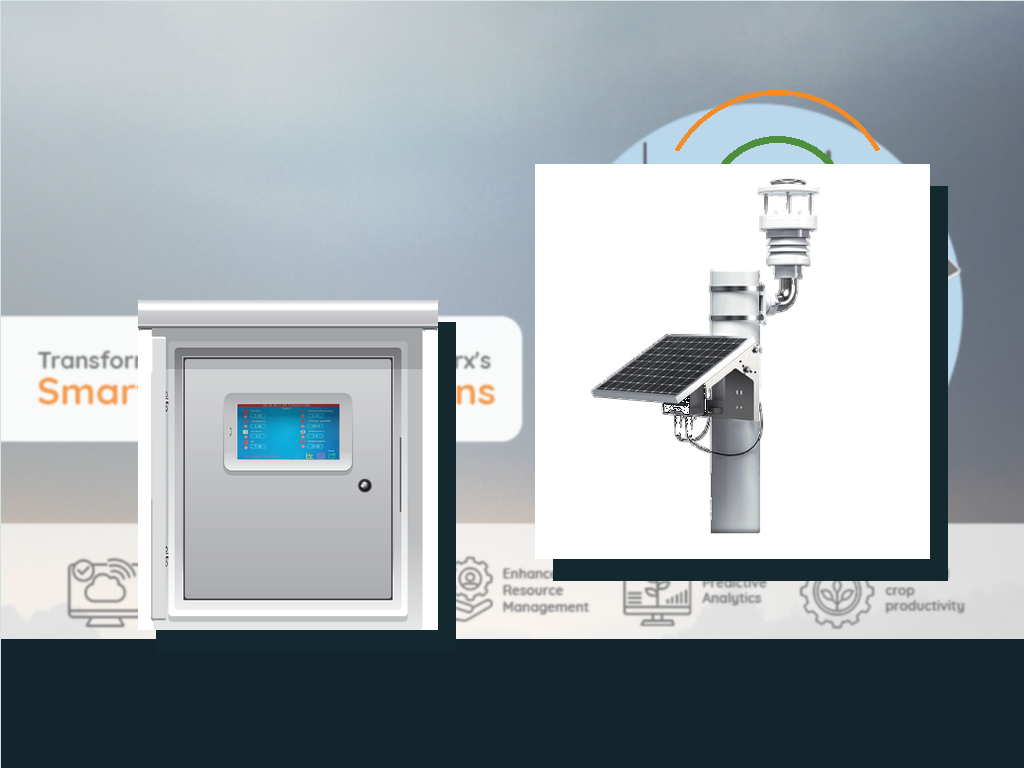
- packetSENSE Automated Weather Station for wind, rainfall, radiation, pressure, temperature, and humidity context
- packetSENSE Rainfall and Submersible Hydrostatic Pressure Level for flood, watershed, and drainage monitoring
- packetSOIL and soil-moisture sensing for irrigation timing and crop-condition programs
- packetSENSE AquaMetrics Pro and AquaScope for water quality, aquaculture, reservoirs, and environmental programs
- packetSENSE Outdoor Air Quality with Solar Panel for climate, emissions, and public-environment monitoring
Deployment Blueprint
- Define the operating decision first: alerting, reporting, compliance evidence, maintenance triage, resource optimization, or public-service coordination.
- Map the physical environment: sensor locations, mounting constraints, gateway placement, backhaul, power source, and field-service access.
- Select the sensing and integration stack: LoRaWAN devices, packetCELL gateways, packetMODBUS where legacy equipment is involved, packetVIEW dashboards, and APIs where the data must feed an existing platform.
- Set data rules before rollout: sampling interval, alert thresholds, escalation owner, historical reporting cadence, and exception-handling workflow.
- Pilot in a bounded area, review data quality and user behavior, then expand by repeating the same deployment pattern across sites, departments, campuses, or LGU locations.
Operational Metrics to Track
A successful rollout should define success measures before devices are installed. Useful metrics for this topic include:
- rainfall intensity and accumulation
- soil moisture trend
- irrigation response time
- water quality exceptions
- localized weather anomalies
Governance, Security, and Integration
LoRaWAN deployments should be treated as operational technology, not casual gadget projects. Device identity, gateway ownership, alert permissions, dashboard access, data retention, and API use must be clear before scale-up. For schools, LGUs, utilities, and enterprises, the same discipline also improves procurement: each phase can be tied to coverage, device count, operating owner, service-level expectation, and a measurable outcome.
Background Reading
Packetworx and Varacco recently entered into a strategic partnership that aims to accelerate growth for both companies and the telco and agriculture industries. The two companies are working on research that is focused on ‘Improving Productivity and Post-Harvest Quality of Coffee Through Climate-Smart and Covid-Adaptive cost-efficient Internet of Things in Cavite and Davao in the Philippines.’
Varacco, a food and manufacturing company, was founded by Ariestelo ‘Aries’ Asilo and Kath Manto in 2018 and is recognized as one of 50 UN Best Small Businesses: Good Food for All for their vision, impact, and food innovation.
The partnership aims to strategically use both companies’ strengths in their respective industries. Talking about the project’s objectives, Aries emphasized increasing productivity and enhancing coffee quality by monitoring climate and environmental parameters in a farm. By equipping farmers and technicians with accurate data, it becomes easier for them to determine the proper treatment and intervention on the growth of crops (e.g., augmenting watering activities when the temperature is high). The partnership aims to start with an initial number of 387 farmers in Cavite and Davao. It targets to improve cultural developments in the coffee industry.
Aries expressed excitement over the project as this will be the first of its kind in the Philippines and a pioneering partnership that adopts the Internet of Things. In addition, the project is vouched and will be funded by the United States Department of Agriculture (USDA), a clear testament of its vast and promising potential.
Why Packetworx Partnered With Varacco The project’s goal is to increase productivity and quality in areas where these goods are produced. The partnership will enhance Varacco’s capabilities in utilizing IoT for Cavite and Davao coffee farmers, who are vital contributors to the agriculture industry.
With the help of Packetworx, Varacco will be able to bring the power of IoT to many small farmers, who will benefit from automated and unified reporting practices, remotely operated and controlled farm equipment, smart agriculture systems, and so on.
Packetworx's straightforward platform and scalable, reliable technology will allow Varacco to better meet the needs of farmers and enable them to enhance the quality of their products.
Expected developments for the project include research and pilot testing in Cavite and Mindanao, expansion to other parts of Mindanao (such as the Mount Apo with its Coffea arabica), and possible partnership with big corporations like Nestle.
Speaking about the concrete offerings of the consortium, Aries shared that both devices and platform will be provided to the farmers. These involve rainfall, humidity, and other sensors working within the LoRaWAN technology framework.
‘We are sparking a revolution in the local coffee industry,’ Aries added. This is what both companies desire to achieve. With increasing developments in big data and AI, he believes it will also become possible to innovate with similar crops like cacao. The goal, ultimately, is for LGUs and other government bodies to follow suit and institutionalize a technological industry practice that can be shared with the rest of the world.
Packetworx is the leading enabler of IoT and the only IoT technology social enterprise in the Philippines. The company’s mission is to accelerate the adoption of IoT solutions to help the country transition toward an Internet-powered future. They do this by providing end-to-end IoT solutions, be it devices, network infrastructure, or cloud-based data visualization tools.
Varacco, based in Lipa City, Batangas, owns the registered trademark brand ‘Timplado’. They are a food and beverage company that owns the patented dip coffee utility model and focuses on creating rich, full-bodied coffee blends in a matter of seconds. With distinct blends made from purely local ingredients and a social mission to empower coffee farmers, youths, and PWDs, Varacco aims to be recognized as a thought leader in the Philippine coffee industry and is positioned to grow faster as a digital-first brand available to coffee drinkers and food lovers.