
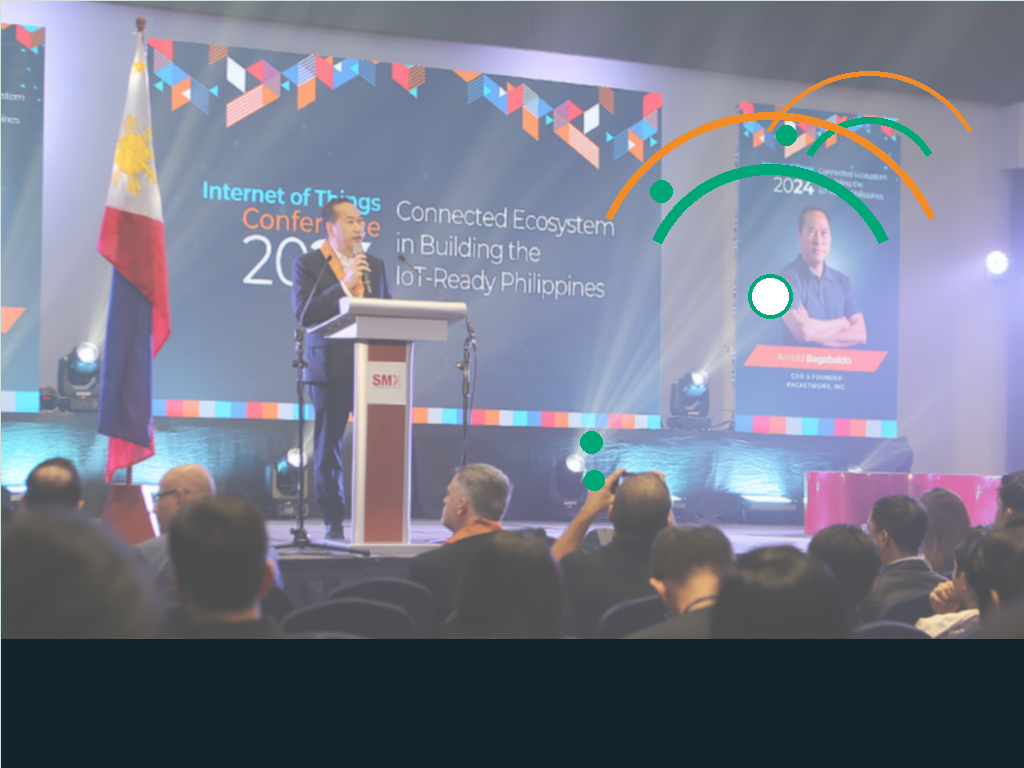
Packetworx One of International Tech Innovation Conference Grand Finalists: Deployment and Solution Perspective
The technical value of LoRaWAN is strongest when it is combined with coverage strategy, device interoperability, partner enablement, hosted platforms, and repeatable deployment patterns.
Executive Brief
- Focus area: LoRaWAN network, partnerships, and IoT market adoption.
- Connectivity model: low-power distributed sensing over LoRaWAN, supported by gateways, device management, dashboards, alerts, and integration-ready data.
- Solution fit: combine connectivity, packetSENSE devices, packetCELL gateways, packetVIEW, and partner enablement into a phased deployment.
- Implementation principle: start with measurable operational decisions, not with isolated devices.
The Innovation-to-Market Problem
Technology recognition and startup visibility are valuable only when they help a solution reach customers, partners, and repeatable deployments. Innovation programs should test whether an IoT offer can solve a costly problem, be supported in the field, and scale through a credible market pathway.
LoRaWAN use cases span cities, buildings, utilities, agriculture, logistics, and industry
LoRa AllianceLoRaWAN base stations were included in Packetworx and Actility's nationwide deployment plan
ActilityIoT ventures need validation, partner access, and deployment discipline to move beyond demos
Packetworx innovation articlePriority Use Cases
- Use innovation events to validate customer problems, deployment requirements, and partner interest.
- Translate recognition into field pilots with devices, network coverage, dashboard ownership, and measurable outcomes.
- Build a repeatable go-to-market model around Packetworx connectivity, products, and solution support.
LoRaWAN Adoption Context
LoRaWAN fits IoT workloads that need long range, low power, wide-area coverage, and modest payloads from many distributed sensors. For the Philippine market, the strategic issue is not simply whether sensors can transmit; it is whether enterprises, LGUs, schools, telcos, and integrators can build reliable programs on top of connectivity, gateways, device management, dashboards, and support.
Reference Architecture
- Sensing layer: low-power devices capture physical signals such as air quality, water level, rainfall, energy, motion, temperature, humidity, equipment status, location, or user feedback.
- Connectivity layer: LoRaWAN carries small telemetry messages over long distances to packetCELL gateways or compatible LoRaWAN infrastructure, with cellular or wired backhaul where needed.
- Network and platform layer: the LoRaWAN Network Server, packetVIEW, and partner platforms manage device identity, payload decoding, dashboards, alerts, reports, and APIs.
- Operations layer: facility teams, LGUs, campuses, integrators, or enterprise users act on exceptions, compare trends, and refine thresholds based on actual field behavior.
Packetworx Solution Stack
This use case can be implemented as a layered solution rather than a one-off installation. Relevant Packetworx building blocks include:
- packetCELL Outdoor LoRaWAN Gateway for field, campus, city, and industrial coverage
- LoRaWAN Network Server and packetVIEW for device onboarding, routing, dashboards, and alerts
- packetMODBUS for connecting industrial and utility equipment that already speaks Modbus
- packetSENSE devices across air quality, weather, water, power, motion, tracking, and safety use cases
- Partner integrations through REST APIs, system integrators, telcos, universities, and solution providers
Deployment Blueprint
- Define the operating decision first: alerting, reporting, compliance evidence, maintenance triage, resource optimization, or public-service coordination.
- Map the physical environment: sensor locations, mounting constraints, gateway placement, backhaul, power source, and field-service access.
- Select the sensing and integration stack: LoRaWAN devices, packetCELL gateways, packetMODBUS where legacy equipment is involved, packetVIEW dashboards, and APIs where the data must feed an existing platform.
- Set data rules before rollout: sampling interval, alert thresholds, escalation owner, historical reporting cadence, and exception-handling workflow.
- Pilot in a bounded area, review data quality and user behavior, then expand by repeating the same deployment pattern across sites, departments, campuses, or LGU locations.
Operational Metrics to Track
A successful rollout should define success measures before devices are installed. Useful metrics for this topic include:
- gateway availability
- device join success
- message delivery consistency
- battery replacement interval
- pilot-to-rollout conversion
Governance, Security, and Integration
LoRaWAN deployments should be treated as operational technology, not casual gadget projects. Device identity, gateway ownership, alert permissions, dashboard access, data retention, and API use must be clear before scale-up. For schools, LGUs, utilities, and enterprises, the same discipline also improves procurement: each phase can be tied to coverage, device count, operating owner, service-level expectation, and a measurable outcome.
Background Reading
The challenge: improving existing solutions Last August 27, Road to Ignite launched the initial pitching competition that selected three startups per category. With over a hundred applications, Packetworx ranked among the three best proposals in its category. Packetworx competed under the Workplace Tech and Other Industries. The main challenge with the traditional Internet is it is designed to connect people and not things or devices. Because of this, there is no easy way to connect devices and collect data from the edge to the cloud. Currently, data is gathered from physical sources rather than digital sources. Lastly, the solutions available are powered with short battery life, complicated to install, and oftentimes expensive.
In their proposal, Packetworx presented a solution to this problem.
The solution: Internet of Things powered by LoRaWAN To address one of the main issues, Packetworx presented two solutions - (1) innovative IoT devices and (2) LoRaWAN connectivity. Through LoRaWAN, the team offers low cost and long-range IoT devices. These devices can offer a whole range of solutions that address industry-specific gaps.
By offering solutions that reduce costs and increase productivity, the proposal is a promising sight of a revolution in the current Philippine business operations.
The difference that Packetworx makes As the first and only LPWAN connectivity provider in the Philippines, Packetworx is in a good position to cascade LoRa technologies that will benefit Filipino customers. The startup also used this to their advantage during their pitch for technologies that can transform the workplace.
‘We put the customer at the center of everything that we do. We identify what are their pain points; what sort of technologies can easy their daily experiences inside the workplace. And with this in mind, we are able to design solutions that focus on using real-time data and analytics to their advantage,’ said Packetworx CEO and Founder Arnold Bagabaldo.
According to Bagabaldo, their Wildfire Pitch focused on the same intention. This is to optimize workplace operations with their device sensors, machine learning, artificial intelligence, and other solutions related to advanced analytics. By using these, Packetworx is able to understand and better serve its customers.
Ignite Cyber 2020 IGNITE is the Philippine’s biggest premier international conference by Techshake, Dentsu X, and Brainsparks. For the past 3 years, Ignite has gathered the largest audiences from the startup ecosystem, all under one roof. For its 2020 run, Ignite will be held online.
IGNITE partners JETRO, Glico, and Rotho Pharmaceutical, and special participation of Mynavi, startups from HealthTech, EduTech, and Fintech will pitch their fundraise and get a chance to win $5,000 equity-free cash, connect to over 100+ investors, and present to over 1000+ audience this October 2020.
The Pitch Competition An event hosted by Ignite 2020, the Wildfire Pitch Competition invites startups to pitch to multiple organizations, judges, and prizes all on one stage. The competition gathers startups from Manila, Batangas, Laguna, Iloilo, Cebu, Davao, and different provinces in the country.
The grand finalists, Packetworx included, have a chance to win $5,000 equity-free cash, connect to over 100+ investors, and present to over 1000+ audience this October 2020.