
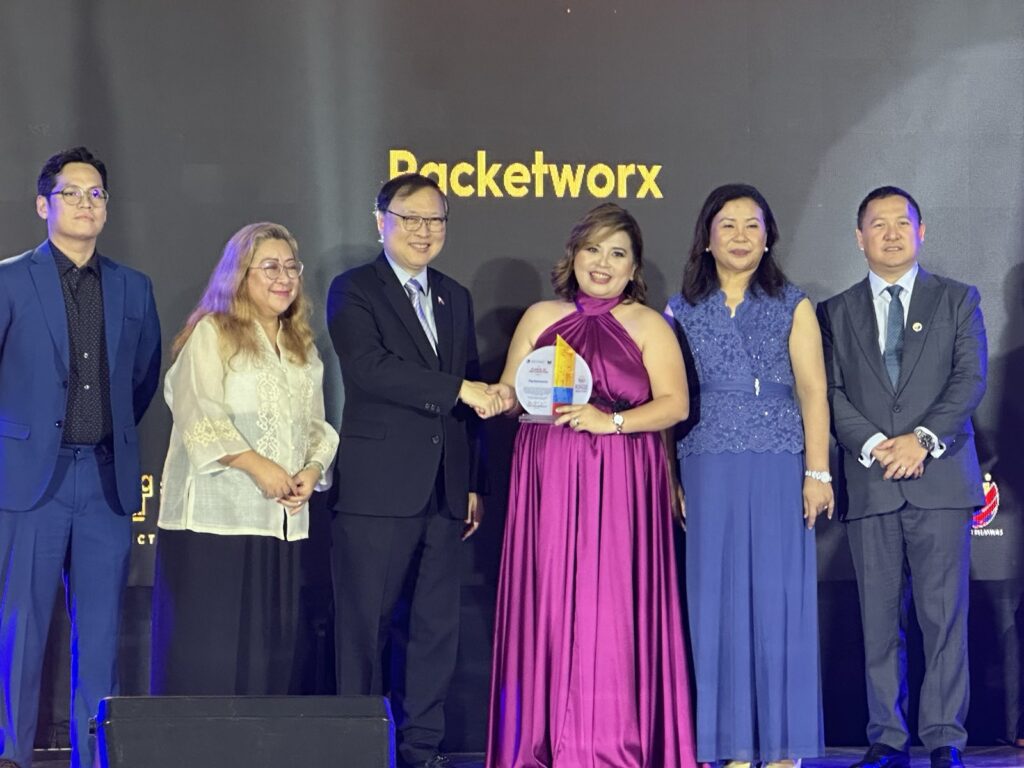
Packetworx Significant Contributions to the “Bagong Pilipinas: Bayang Digital” Campaign Earns Recognition at NICTM 2024: Deployment and Solution Perspective
Connected sensing helps public-sector teams move from episodic field checks to continuous situational awareness for LGUs, schools, public buildings, and critical community assets.
Executive Brief
- Focus area: Disaster risk reduction and public resilience.
- Connectivity model: low-power distributed sensing over LoRaWAN, supported by gateways, device management, dashboards, alerts, and integration-ready data.
- Solution fit: combine connectivity, packetSENSE devices, packetCELL gateways, packetVIEW, and partner enablement into a phased deployment.
- Implementation principle: start with measurable operational decisions, not with isolated devices.
The Digital Public-Service Continuity Problem
Digital-government and resilience programs are strongest when technology investments improve public-service continuity, not only visibility. Recognition campaigns and national digital initiatives should be connected to practical deployments: monitoring public buildings, utilities, local hazards, schools, and community assets that affect daily service delivery.
tropical cyclones enter the Philippine Area of Responsibility on average
PAGASAloss threshold the Philippines has a 40% chance of exceeding from natural hazards in a given year
World Bank Climate Profilepublic digital programs need technology partners, LGUs, schools, and operating teams to sustain outcomes
Packetworx public-sector articlePriority Use Cases
- Connect public facilities, schools, drainage systems, utilities, and environmental assets into dashboards that departments can use.
- Support LGU and national programs with repeatable deployment patterns rather than one-off demonstrations.
- Use IoT data for reporting, service continuity, public resilience, and evidence-based planning.
Resilience Context
Flooding, severe weather, infrastructure stress, and facility incidents become more manageable when responders see early indicators before the situation is already visible on the ground. LoRaWAN supports this model because sensors can be placed in drainage channels, waterways, school buildings, public facilities, and remote assets where wired connectivity is expensive or impractical.
Reference Architecture
- Sensing layer: low-power devices capture physical signals such as air quality, water level, rainfall, energy, motion, temperature, humidity, equipment status, location, or user feedback.
- Connectivity layer: LoRaWAN carries small telemetry messages over long distances to packetCELL gateways or compatible LoRaWAN infrastructure, with cellular or wired backhaul where needed.
- Network and platform layer: the LoRaWAN Network Server, packetVIEW, and partner platforms manage device identity, payload decoding, dashboards, alerts, reports, and APIs.
- Operations layer: facility teams, LGUs, campuses, integrators, or enterprise users act on exceptions, compare trends, and refine thresholds based on actual field behavior.
Packetworx Solution Stack
This use case can be implemented as a layered solution rather than a one-off installation. Relevant Packetworx building blocks include:
- packetSENSE Rainfall, Automated Weather Station, and water-level sensors for local hazard awareness
- packetSENSE Outdoor Air Quality, packetNOISE, and environmental stations for public-space monitoring
- packetSENSE Smart Ultrasonic Water Meter, pressure, flow, and totalizer devices for utility and drainage systems
- packetSENSE Compact Tracker and Badge for field assets, workers, and response equipment
- packetVIEW dashboards and alerts for city operations, school administrators, and response teams
Deployment Blueprint
- Define the operating decision first: alerting, reporting, compliance evidence, maintenance triage, resource optimization, or public-service coordination.
- Map the physical environment: sensor locations, mounting constraints, gateway placement, backhaul, power source, and field-service access.
- Select the sensing and integration stack: LoRaWAN devices, packetCELL gateways, packetMODBUS where legacy equipment is involved, packetVIEW dashboards, and APIs where the data must feed an existing platform.
- Set data rules before rollout: sampling interval, alert thresholds, escalation owner, historical reporting cadence, and exception-handling workflow.
- Pilot in a bounded area, review data quality and user behavior, then expand by repeating the same deployment pattern across sites, departments, campuses, or LGU locations.
Operational Metrics to Track
A successful rollout should define success measures before devices are installed. Useful metrics for this topic include:
- rainfall-to-water-level correlation
- threshold alert acknowledgement time
- public-facility condition status
- sensor uptime
- post-event review findings
Governance, Security, and Integration
LoRaWAN deployments should be treated as operational technology, not casual gadget projects. Device identity, gateway ownership, alert permissions, dashboard access, data retention, and API use must be clear before scale-up. For schools, LGUs, utilities, and enterprises, the same discipline also improves procurement: each phase can be tied to coverage, device count, operating owner, service-level expectation, and a measurable outcome.
Background Reading
The National ICT Month 2024 (NICTM) Culminating Event, held on June 28 at Crowne Plaza Manila Galleria Hotel in Quezon City, served as a platform to honour and celebrate the significant contributions of partners who have played an essential role in advancing the Department of Information and Communications Technology’s (DICT) transformative campaign, “Bayang Pilipinas: Bayang Digital.”
DICT Secretary Ivan John E. Uy emphasised the importance of cross-sector collaboration in advancing the Philippines’ ICT sector. The country’s ICT Chief underscored DICT’s commitment to spurring digitalization to tackle societal challenges and drive growth.
Among the distinguished honorees, Packetworx received recognition for its pivotal role in advancing the mission of the national government. Notably, Packetworx was the sole company honoured for its contributions in the Internet of Things (IoT) sector, reflecting its significant impact on the ICT landscape in the Philippines.
“We are deeply honored and grateful for this recognition from Secretary Ivan Uy and the DICT,” said Ms. Raisa Ysaac-Orbon, Chief Marketing Officer of Packetworx. “This award fuels our commitment to supporting the DICT’s mission of creating a digitally empowered Philippines through IoT, transforming one city at a time.”
“We also extend our heartfelt thanks to Usec Jocelle Batapa-Sigue for her invaluable collaboration in advancing IoT technologies,” she added.
Looking ahead, Packetworx vows to continue its role as a catalyst for digital innovation, working in tandem with government initiatives and other stakeholders to drive the Philippines toward a more connected, technologically advanced future.
The NICTM 2024 Culminating Event celebrated the achievements of partners like Packetworx but also reaffirmed the country’s commitment to digital transformation.