
Packetworx to Deploy the First Location of Things (LoT) Infrastructure in the Philippines With ORBiz International Ltd.: Deployment and Solution Perspective
Operations intelligence connects legacy equipment, assets, people, spaces, and service signals so teams can act from evidence instead of after-the-fact reports.
Executive Brief
- Focus area: Operations, assets, and industrial visibility.
- Connectivity model: low-power distributed sensing over LoRaWAN, supported by gateways, device management, dashboards, alerts, and integration-ready data.
- Solution fit: combine connectivity, packetSENSE devices, packetCELL gateways, packetVIEW, and partner enablement into a phased deployment.
- Implementation principle: start with measurable operational decisions, not with isolated devices.
The Distributed Asset Location Problem
Vehicles, tools, containers, field equipment, and mobile workers can become operational blind spots when location updates depend on phone calls, paper logs, or manual check-ins. Location-of-Things programs need a practical balance of coverage, battery life, update frequency, and workflow integration so teams know where assets are and whether they are being used as intended.
LoRaWAN is designed for wide-area, low-power communication from distributed devices
LoRa Alliancebattery life is a core LoRaWAN design objective for low-power IoT devices
LoRa Allianceasset programs create value when location data triggers dispatch, recovery, utilization, or safety workflows
Packetworx Location of Things use casePriority Use Cases
- Track field assets, response equipment, vehicles, tools, and containers across sites where cellular devices may be too costly or power-hungry.
- Use geofences, movement exceptions, inactivity, and last-seen status to prioritize action.
- Integrate location signals into operations dashboards used by dispatch, facilities, logistics, or LGU teams.
Industrial Operations Context
Operations teams often run across many sites, machines, vehicles, tools, and work areas. The highest-value signals are not always inside a modern control system. LoRaWAN sensors, trackers, badges, routers, and Modbus bridges help expose status, location, utilization, access, vibration, environmental conditions, and service requests without replacing every existing asset.
Reference Architecture
- Sensing layer: low-power devices capture physical signals such as air quality, water level, rainfall, energy, motion, temperature, humidity, equipment status, location, or user feedback.
- Connectivity layer: LoRaWAN carries small telemetry messages over long distances to packetCELL gateways or compatible LoRaWAN infrastructure, with cellular or wired backhaul where needed.
- Network and platform layer: the LoRaWAN Network Server, packetVIEW, and partner platforms manage device identity, payload decoding, dashboards, alerts, reports, and APIs.
- Operations layer: facility teams, LGUs, campuses, integrators, or enterprise users act on exceptions, compare trends, and refine thresholds based on actual field behavior.
Packetworx Solution Stack
This use case can be implemented as a layered solution rather than a one-off installation. Relevant Packetworx building blocks include:
- packetMODBUS for Modbus RTU equipment and industrial telemetry over LoRaWAN
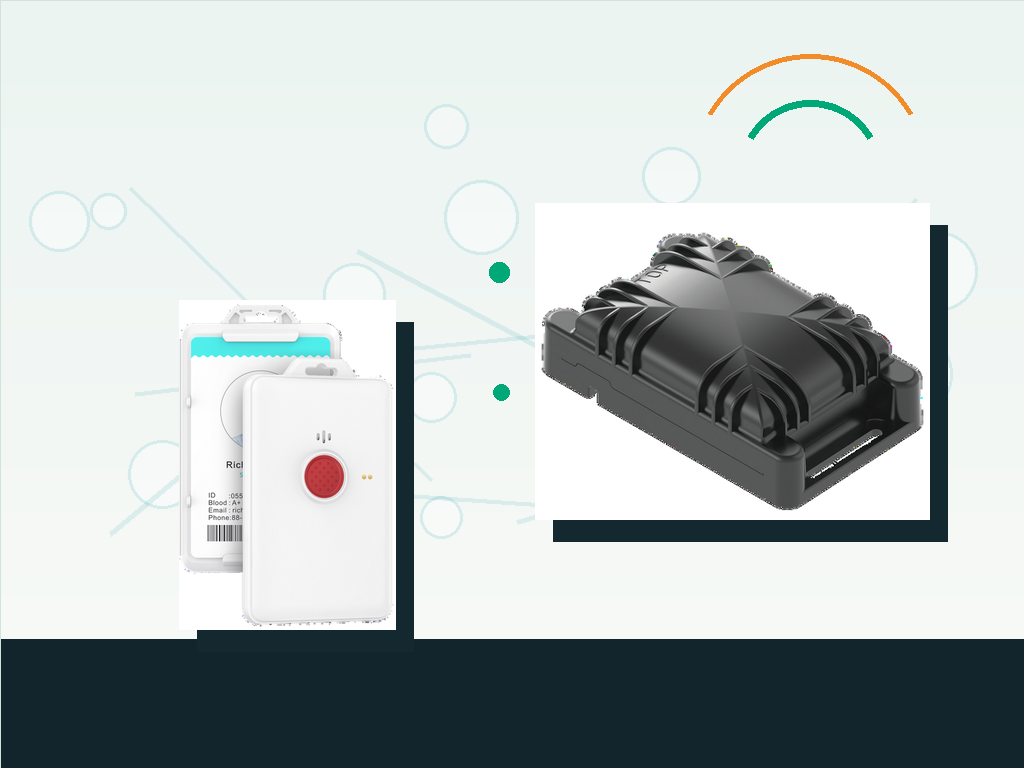
- packetSENSE Compact Tracker and Badge for assets, workforce, vehicles, tools, and safety workflows
- Vibration Sensor VS370 and industrial temperature/humidity sensors for condition monitoring
- packetCELL Industrial IoT Router and gateways for mixed-connectivity industrial sites
- Door, PIR, feedback, smoke, gas, UPS, and power devices for operational exception management
Deployment Blueprint
- Define the operating decision first: alerting, reporting, compliance evidence, maintenance triage, resource optimization, or public-service coordination.
- Map the physical environment: sensor locations, mounting constraints, gateway placement, backhaul, power source, and field-service access.
- Select the sensing and integration stack: LoRaWAN devices, packetCELL gateways, packetMODBUS where legacy equipment is involved, packetVIEW dashboards, and APIs where the data must feed an existing platform.
- Set data rules before rollout: sampling interval, alert thresholds, escalation owner, historical reporting cadence, and exception-handling workflow.
- Pilot in a bounded area, review data quality and user behavior, then expand by repeating the same deployment pattern across sites, departments, campuses, or LGU locations.
Operational Metrics to Track
A successful rollout should define success measures before devices are installed. Useful metrics for this topic include:
- asset location confidence
- equipment exception rate
- maintenance response time
- manual inspection reduction
- worker or asset safety events
Governance, Security, and Integration
LoRaWAN deployments should be treated as operational technology, not casual gadget projects. Device identity, gateway ownership, alert permissions, dashboard access, data retention, and API use must be clear before scale-up. For schools, LGUs, utilities, and enterprises, the same discipline also improves procurement: each phase can be tied to coverage, device count, operating owner, service-level expectation, and a measurable outcome.
Background Reading
Packetworx, the leading Internet of Things (IoT) company in the Philippines, signed an exclusive agreement with ORBiz to build and deploy the very first Location of Things (LoT) infrastructure in the Greater Metro Manila in the next 3-6 months, and expand quickly to other major cities in the country.
ORBiz International Ltd. is the leading enterprise IoT location platform and network solution provider in Asia that enables Location of Things (LoT) applications.
‘This partnership will enable enterprise-grade tracking and monitoring solution. Industries that rely on tracking and location, such as logistics and supply chain, can get up to centimeter and millimeter positioning accuracy,’ says Arnold Bagabaldo, Founder and CEO of Packetworx.
Various applications for positioning data can be used for tracking, emergency and disaster preparedness, mapping and surveying for real estate and related industries to get accurate measurements like property boundaries.
‘For telecommunications companies, we can provide accurate information up to millimeter level to map and locate underground fiber installations. We can now measure the sways and movement of buildings and other structures like bridges to monitor safety,’ explains Arnold.
ORBiz provides secure, accurate, and reliable location intelligence and end-to-end track & trace capability. It uses Real Time Kinematics (RTK), a Global Navigation Satellite System (GNSS) technology that is capable of partially removing signal propagation errors due to density differences in atmospheric layers. It is capable of creating and gathering real-time correction data that allows for more accurate positioning than the traditional unassisted measurements currently being used by the industry.
‘We use RTK chips and devices that are openly available. Any RTK compliant and compatible chip will work with us so they can integrate that into centimeter and millimeter level accuracy.’ explains Jason Lee, CEO of ORBiz.
In partnership with ORBiz, Packetworx will deploy Continuous Operating Reference Stations (CORS) in the Philippines. It enhances GPS location and positioning to provide more accurate and precise locations of objects or vehicles being tracked. The base stations will connect enterprise IoT applications including but not limited to transportation, logistics, construction, safety, insurance, and land development.
‘We’re offering this as an easy-to-use Application Programming Interface (API) that you can subscribe from to get the correction information to give you meter, centimeter, and millimeter level accuracy,’ says Arnold.
These LoT solutions will allow enterprise customers to create better decisions to improve their operations, develop better products and services and provide better experience for their customers.
Packetworx is a technology social enterprise which focuses on enabling IoT in the Philippines. It is a member of the LoRa Alliance™, a worldwide alliance of over 500-member companies that support the standardization of LPWAN with the LoRaWAN specification and has created a certification and compliance program to ensure interoperability among its members.
It is the official host for The Things Network in the Philippines and South East Asia. The Things Network (TTN) is the largest community of startups, businesses and developers globally building a public LoRaWAN network.
About ORBiz International Ltd.
Focused on providing secure, accurate and reliable solutions for industries, government sectors and IoT/M2M enablers where positioning, navigation and tracking/telemetry are crucial to the extent of life-saving in certain cases.
Our proprietary satellite embedded solutions provide 2 way authenticated communication solutions to customers with IoT sensors, terminals and backend management applications through the space transmission media (i.e. multiple satellite systems) and the earth transmission media (i.e. mobile networks) to serve Asia Pacific region in urban and remotes area.